
Technical insight
Impeller Blade-Root Fillet Change: What Must Be Approved Before Cutting?
If a supplier requests a larger internal radius at a blade-to-hub transition, request a marked geometry proposal before approving it. Decide whether the order will retain the released shape, adopt an approved revision or use an explicitly limited authorization. Keep the affected cut on hold until the design authority records that decision.
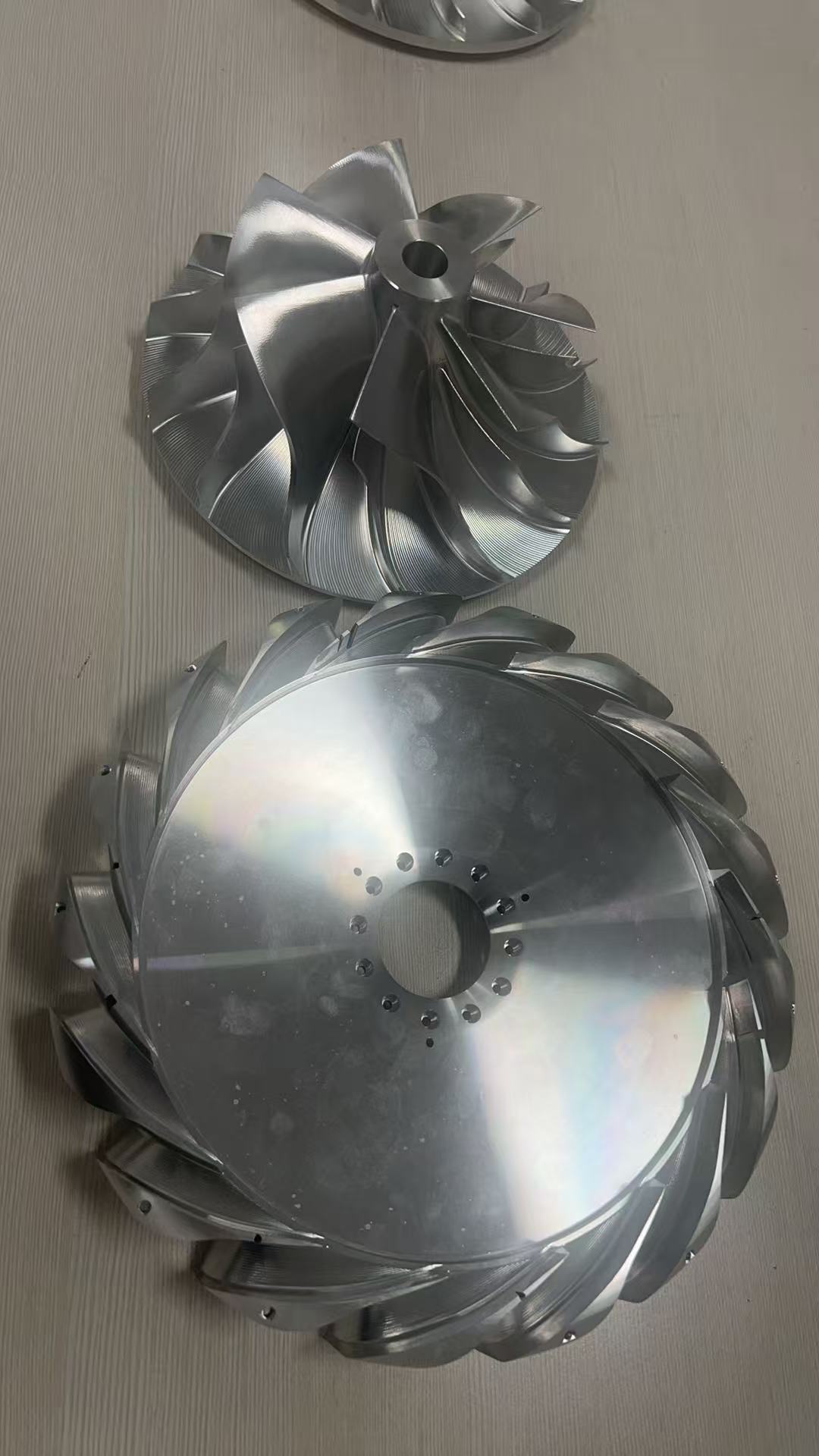
By Geetai Precision
- Published
- Updated
Separate the machining reason from permission to change
Sandvik Coromant explains that cutter engagement increases in internal corners. Its general milling guidance presents a larger component radius and a smaller cutter as different options. That guidance does not authorize changing a particular blade root. [1]
Sandvik also uses a blisk impeller as an example of closed-angle machining and distinguishes wall machining from radius machining. This is tooling context, not a finished root definition for your component. [2]
Ask the supplier to separate two quotation responses: a route retaining the released geometry, and a proposed geometry change awaiting approval. Request the reason for each access concern and the affected blade-side and hub regions. Leave tool and route selection with the manufacturing reviewer.
Request a local before-and-after definition
Keep the original released model intact. Request an identified proposed model plus overlaid sections locating the original and proposed transitions. Mark where the altered surface begins and ends, which blade sides or repeated passages it covers, and which neighboring surfaces must remain unchanged.
Ask the design owner to define the accepted transition and any required continuity, adjacent-surface or inspection conditions. A note saying “increase root radius” should remain open until the approved geometric extent is clear. Ask manufacturing and inspection reviewers to confirm access against that exact proposal.
NASA describes configuration change management as proposal, justification and evaluation, followed by incorporating approved changes and verifying implementation. It separately states that a waiver does not change the baseline. These distinctions inform the worksheet below; NASA procedures are not imposed on this order. [3]
Choose the authorization that actually applies
Use this original decision table with the customer’s document-control process. The design authority selects the route; purchasing records its scope. Use the project’s own terminology for a limited departure.
| Decision | Approval record to obtain | Release checkpoint |
|---|---|---|
| Keep the released geometry | Supplier acknowledges the current drawing/model and identifies its proposed route. | Close the larger-radius request as rejected or withdrawn; do not carry it into CAM. |
| Adopt a revised definition | Design authority releases the changed geometry and identifies the applicable order or items. | Reconcile drawing, model and affected instructions before releasing the cut. |
| Authorize a limited departure | Obtain a controlled disposition naming the geometry, identified items, conditions and expiration or quantity boundary. | Keep the underlying release identifiable; do not extend the authorization to another order. |
| Decision still unresolved | Record the missing geometry or engineering decision and its responsible owner. | Hold the affected operation and keep both quotation options conditional. |
For example, a buyer may approve an altered transition for one identified evaluation item while leaving the drawing unchanged. Ask the approval to state that limited applicability explicitly. A later batch needs its own governing instruction; the evaluation item should not silently become the new master model. This is a hypothetical purchasing example.
Carry the decision into machining and inspection
Before the affected cut, reconcile the approved geometry, change or disposition identifier, route revision and item list. Obtain acknowledgment from the manufacturing and inspection reviewers. If work has already started, preserve its actual state and request a disposition before continuing or attempting to blend it to the proposal.
At the agreed checking stage, request evidence for the approved local transition and any adjacent characteristics named in the disposition. Keep the changed-zone map linked to the report. Have the authorized reviewer resolve missing coverage or an out-of-scope alteration before accepting that feature.
At order closure, retain what was proposed, what was authorized and what was checked. For a repeat order, verify whether the change became part of the released definition or remained item-limited. Keep any separate balancing, assembly and application decisions with their responsible reviewers.
Bring the open change to drawing review
For a turbomolecular rotor inquiry, bring the released drawing and model, marked root-change proposal, requested quantity and named approval owner to the rotor machining review. State whether you want an unchanged-geometry quotation or review of an approved alternative. Agree the required records through the inspection coordination route.
Frequently asked questions
Does a larger root radius automatically become a process-only change?
Ask whether the finished geometry remains inside the released definition. If the proposal changes that definition, obtain the design authority’s disposition before cutting. A machining-access explanation alone should not be treated as approval.
Can a first-piece report authorize the altered shape?
Approve the definition or limited departure first, then review evidence against it. A dimensional record should identify the authorized shape and affected items; it should not retrospectively supply missing permission to alter them.
Related review paths
More from Blog
References
- Milling inside corners — Sandvik Coromant. Accessed 2026-11-03T01:23:02.000Z.
- Milling closed pockets or angles — Sandvik Coromant. Accessed 2026-11-03T01:23:02.000Z.
- Systems Engineering Handbook — 6.5 Configuration Management — NASA. Accessed 2026-11-03T01:23:02.000Z.
- Owner-authorized curved-impeller photograph — geometry context only — Geetai Precision — approved photograph record. Accessed 2026-11-03T01:22:21.522Z.
