Multi-Stage Rotor Simulation Review: What a Screenshot Does Not Establish
Check the scope, revision and exclusions of a rotor machining simulation before approving a proposed route. Includes a buyer evidence-review worksheet.
Technical solution
Five-axis machining review for multi-stage turbomolecular pump rotors, with drawing-defined blade geometry, inspection and balancing requirements.
One Geetai contact coordinates the manufacturing route, verification requirements and delivery through qualified partner workshops.
Machining review focus
Buyer inputs
Verification
Before production
Performance, vacuum service and acceptance criteria are confirmed only against the approved drawing and quotation.
Define the critical dimensions, inspection records and functional validation responsibilities before accepting the quotation.
From geometry to an agreed scope
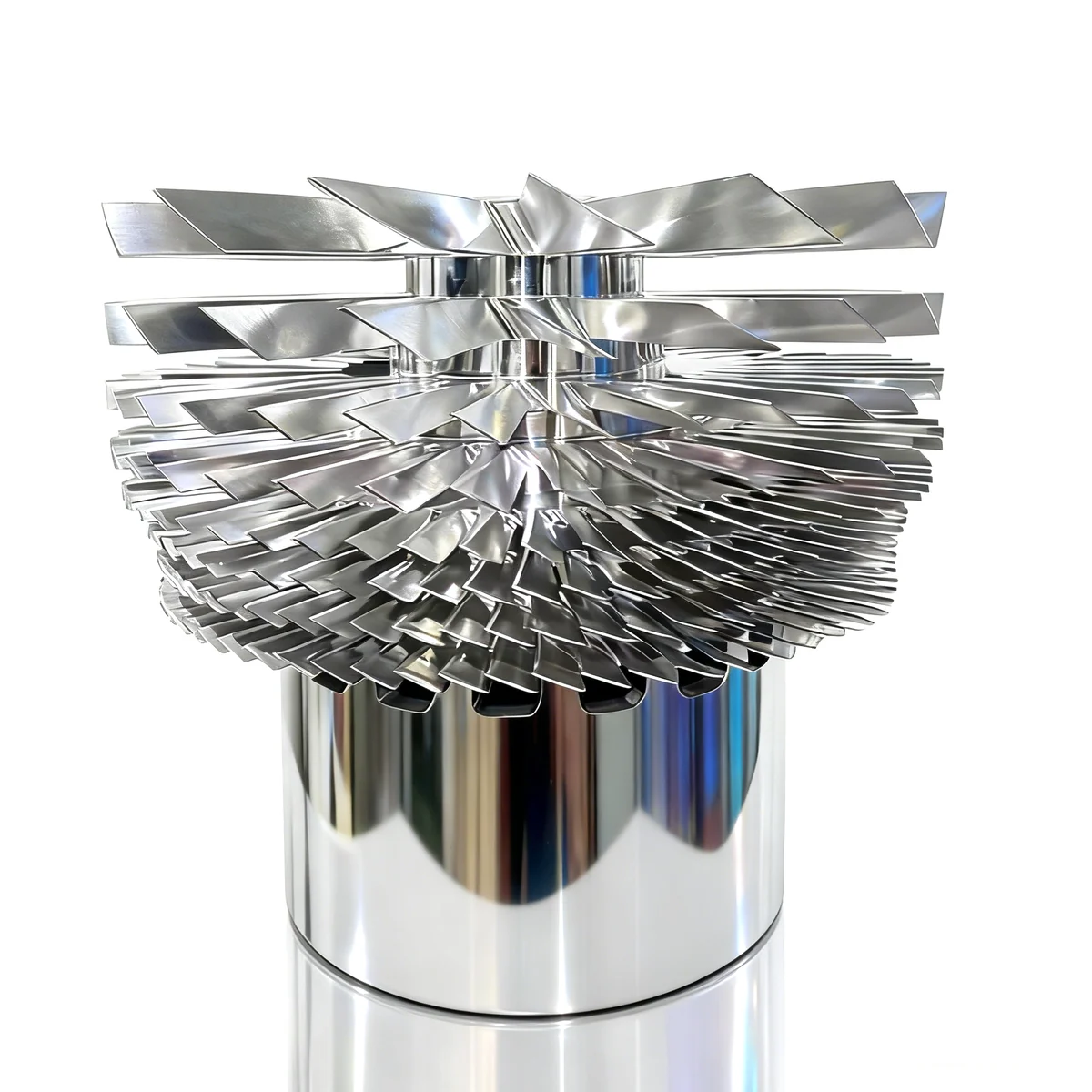
Blade access, workholding and measurement planning belong in the same review. Use the following checklist to prepare your RFQ; it is guidance, not a claimed process record for the pictured part.
Identify blade passages, tool-access restrictions, hub features and the controlled model revision.
Specify grade and condition. Discuss support, machining sequence and the features that need particular distortion control.
Identify datums, blade-profile requirements, runout locations and a practical way to inspect each critical feature.
State the rotor condition to be balanced, reference interfaces and the required acceptance record. Keep component inspection separate from pump-system qualification.
For machining context, Sandvik Coromant’s profile-milling guide explains the influence of tool orientation, tool overhang and finishing strategy on complex surfaces. This background does not establish a particular supplier’s capability.
Before your RFQ
Yes. Send a non-confidential project outline first and agree the drawing-transfer method. Feasibility is reviewed against the model, blade geometry, material, envelope, quantity and inspection requirements; it is not inferred from a reference photograph.
These are assessed feature by feature after drawing review. Identify the critical dimensions, datum scheme and acceptance method so the proposed manufacturing route can be evaluated for your part.
Specify the characteristics to measure, report format and sampling needs. For balancing, include the customer acceptance specification, rotor assembly state, interfaces and any correction restrictions. Availability and documentation are confirmed in the quotation.
Include the initial quantity and likely repeat requirement in the brief. The manufacturing and inspection scope is reviewed around the requested batch; no minimum quantity or delivery time is assumed before review.
Request NDA-first contact and start with a non-confidential component description. Agree the NDA and transfer method before exchanging proprietary drawings or customer data.
Geetai offers independent, drawing-led manufacturing coordination and is not presented as affiliated with a third-party pump manufacturer. Replacement-part inquiries require authorized manufacturing data. OEM identity, drop-in compatibility and pump performance are not established by a machining photograph.
Engineering Blog
Check the scope, revision and exclusions of a rotor machining simulation before approving a proposed route. Includes a buyer evidence-review worksheet.
Prepare a rotor CAD handoff with separate checks for geometry, visible annotations and machine-readable PMI before accepting a quotation.
Explore turbomolecular rotor machining challenges: blade support, tool access, finishing and inspection questions to resolve before production.
Drawing-led review
Include the controlled drawing, material, quantity and project-defined verification requirements.