
Technical insight
CMM Program Revision Review: Can You Reuse the Old Routine?
When an impeller drawing changes, approve reuse at the characteristic level. Map what changed to the program, evaluation and report before accepting any result against the new revision.
By Geetai Precision
- Published
- Updated
Follow the changed requirement through the measurement chain
NIST describes an inspection chain that links the product definition to a measurement plan and its results. In its discussion of QIF, a measurement feature such as a cylinder is distinct from a characteristic such as the diameter evaluated on that feature.
For a supplier review, treat the drawing revision, the executable routine revision and the exported report template as separate identifiers. A new header does not show that the evaluation changed. Conversely, a changed header does not always require a new probe path. Ask the supplier to show which part of the chain changed.
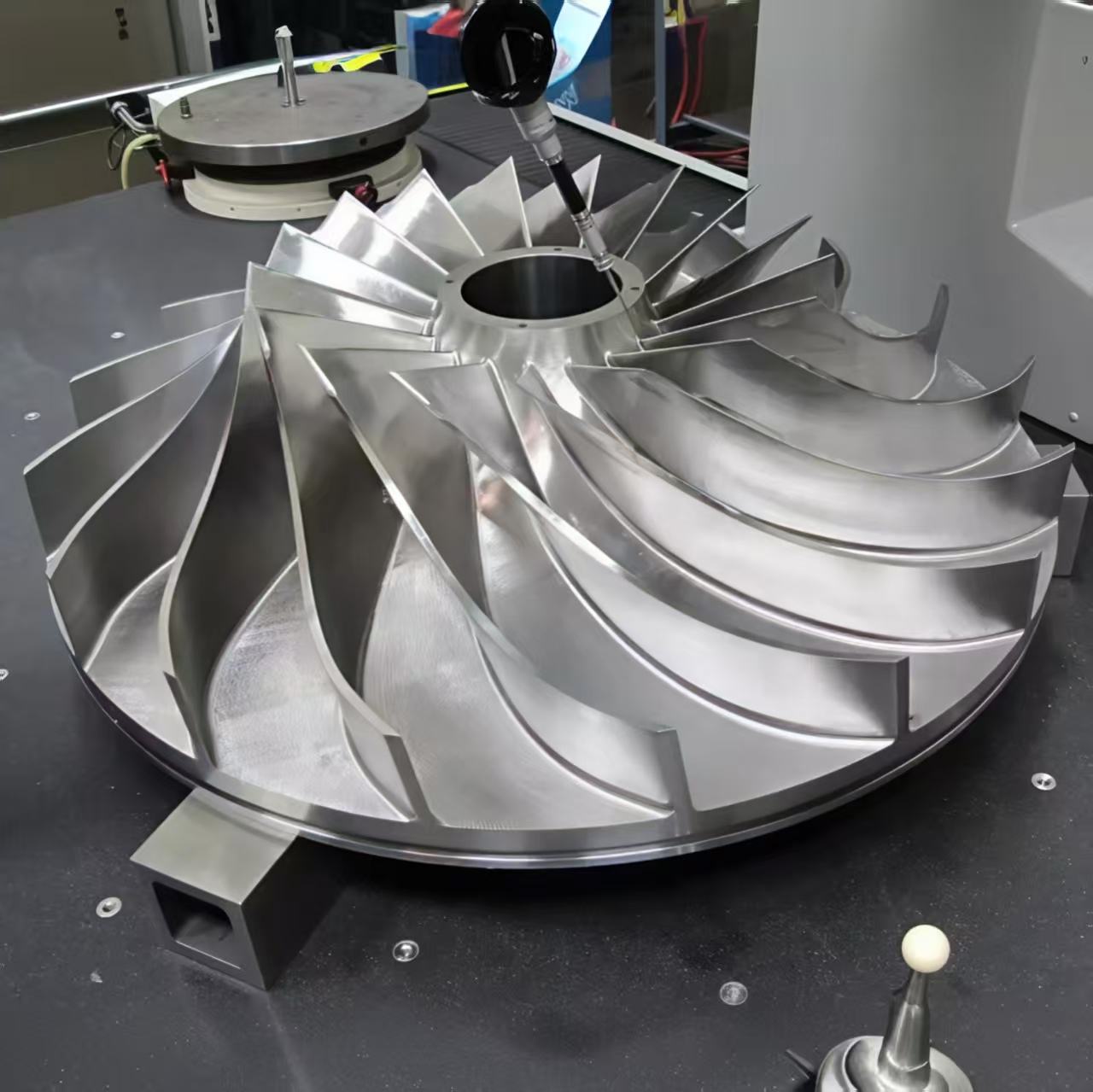
Consider an impeller drawing update that revises the hub bore requirement and also renumbers a blade characteristic. The bore row needs a decision about the governing limit and the ability of the existing data to support it. The blade row needs a mapping check so that the report still points to the same geometry and evaluation. Record the decisions separately.
Change impact matrix for the next order
| Change on the released definition | Check before reuse | Evidence for the release file |
|---|---|---|
| Identifier or balloon changed | Map old and new IDs to the same feature and requirement; check the exported row reference. | Reviewed crosswalk and a sample report from the intended template. |
| Acceptance limit changed; geometry and datum references unchanged | Verify the stored data, part identity and evaluation method are suitable for the new limit; otherwise measure again. | Fresh evaluation with the new criterion and a link to the inputs, or a rerun record. |
| Datum reference or alignment changed | Review the setup, datum construction and all evaluations dependent on that alignment. | Updated alignment record and verified affected results. |
| Geometry, access or required points changed | Verify the revised path and coverage on the approved setup before routine inspection. | Program revision and a checked first execution for the changed work. |
| A characteristic was added or removed | Trace the new or retired item through the inspection plan and report so no old row is mistaken for a required result. | Reconciled list of required characteristics and the release decision. |
Control the first report against the new revision
Freeze the applicable drawing or model and record its effective lot or serial range. Ask the supplier and quality owner to mark each affected characteristic as unchanged, re-evaluate or remeasure. Include dependencies: a change to an alignment can affect other rows even if their callouts were not edited.
Review the first report line by line against that decision list. Keep the identity of the part or lot, authoritative drawing or model, routine version and report version together. If the source data cannot be tied to the part or the changed requirement cannot be reliably evaluated from it, leave the characteristic open and agree the new measurement.
This is a practical change review, not a substitute for a contractually required first article submission or approval of a new measurement method. Check those requirements separately before releasing the order.
Bring the document revision pair and an anonymized example of the characteristic report to the initial inspection-scope review.
Frequently asked questions
Can we accept the prior report by updating the revision in the header?
Only use prior evidence where the quality owner has approved reuse and the original data, part identity and affected requirements still support the decision. A header change alone establishes none of those links.
Do we need QIF to use the change matrix?
No. The matrix is a purchasing aid. A controlled crosswalk is useful even with a drawing and a spreadsheet, provided each entry can be traced to the governing definition and retained evidence.
Related review paths
More from Blog
References
- Research Results and Recommendations for Universally Unique Identifiers in Product Data Standards — NIST. Accessed 2026-11-17T01:28:01.035Z.
- End-to-End Quality Information Framework (QIF) Technology Survey — NIST. Accessed 2026-11-17T01:29:26.687Z.