Technical insight
Vacuum Component Electropolishing: Review Material Removal and Final Features
If the approved vacuum-component drawing calls for electropolishing, define the delivered geometry before releasing machining. Identify where metal may be removed, which edges or interfaces need protection, and how the treated part will be checked. Request a feature-specific route rather than treating electropolishing as a final cosmetic instruction.
By Geetai Precision
- Published
- Updated
Start with a material-removal budget
Euro Inox describes electropolishing as electrolytic removal of surface metal. It explains that projections experience greater local current density and preferential removal. A nominal removal statement therefore needs a separate discussion of sensitive edges. [1]
Ask the design owner to identify the final drawing limits, specified alloy and condition, surfaces requiring treatment, and required texture. Have the machining and treatment reviewers agree the proposed incoming dimensions and removal allowance for those features. Keep a per-surface allowance distinct from a total diameter change.
Delstar explains that the starting surface and alloy affect the resulting finish, and that mechanical preparation may be necessary. Its guidance does not support treating electropolishing as a way to erase every scratch or surface defect. [4]
Map exposure and final checks by feature
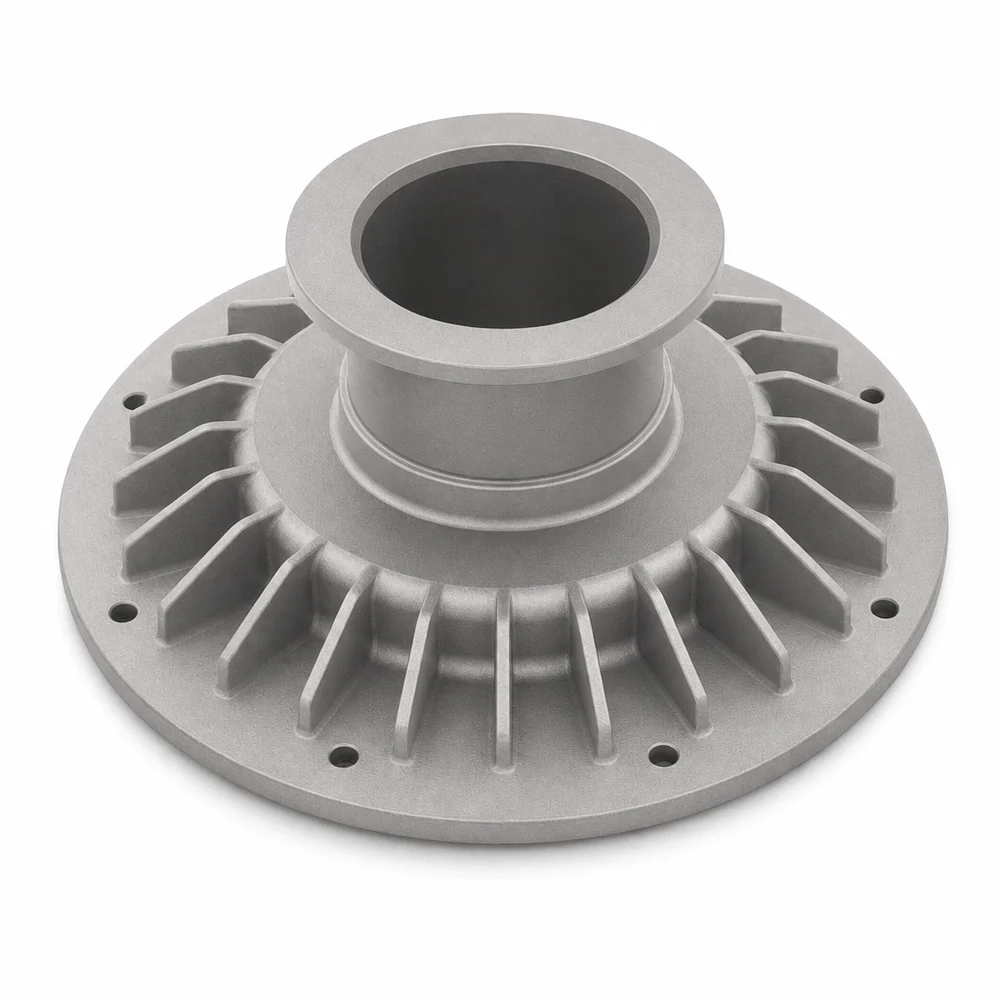
Use the supplied housing illustration to locate the central opening, upper rim, outer flange and intervening ribs when discussing a feature map. Transfer that discussion to the actual controlled drawing. Do not infer a sealing function, alloy, electropolishing history or manufacturing route from the illustration.
The following original worksheet concerns removal from an already specified component. Ask the responsible reviewers to complete the treatment scope and final check for each named feature; these entries are purchasing prompts, not approved process instructions.
| Drawing feature | Treatment-scope question | Final check to agree |
|---|---|---|
| Bore or locating diameter | Is this surface included, excluded or held pending an approved removal allowance? | Name the delivered-state size and form checks; identify their drawing references. |
| Rim, sealing edge or thread crest | Must the edge retain its defined shape? Request the finisher’s proposed protection and contact arrangement. | Agree the edge or thread-specific assessment after treatment; do not close it with an adjacent face result. |
| Recess or internal passage | Is the internal surface included, and how will the provider address access to that geometry? | Mark the required internal coverage and accessible checking locations; resolve an inaccessible region before processing. |
| Reference face or permitted contact zone | Where may electrical contact occur, and which reference surfaces must remain available? | Identify the permitted contact mark and the reference condition used for final dimensional assessment. |
Harrison warns that electropolishing can round sharp edges and thread crests; it also distinguishes internal-surface access from exterior finishing. Able asks customers to identify critical surfaces and evaluate electrical-contact witness marks during sample review. These are reasons for feature-specific review, not approval of a protection method for this part. [2][3]
Connect machining, treatment and acceptance
For stainless steel, Euro Inox separates preparation, electropolishing and post-treatment, including removal of electrolyte and reaction by-products. [1] Ask the proposed provider to name its controlled route; this guide supplies no bath chemistry or operating settings.
- Before machining: reconcile the final drawing with the proposed incoming feature sizes. Leave the affected operation open if the treatment allowance or protected feature remains unresolved.
- Before treatment: confirm item identity, incoming condition, included surfaces and approved contact locations. Where sampling is agreed, retain the sample disposition and the production route it represents.
- After treatment: obtain the agreed dimensional and edge checks, plus the specified texture or surface evidence. Link every result to the same item and treatment record.
- At release: reconcile treatment evidence with separately specified final cleaning, handling and packaging requirements. Assign unresolved residue or inaccessible-surface questions to the responsible technical reviewer.
For example, a quotation may include exterior electropolishing while the drawing marks an internal bore as the required treated surface. Request an access and verification proposal for that bore before accepting the scope. Do not replace the internal requirement with an exterior appearance sample. This is a hypothetical quotation discrepancy.
Resolve excess removal before another operation
If a post-treatment feature misses its final requirement, preserve the incoming and final records and request a technical disposition. Ask the design authority whether another operation is permitted and which surface and dimensional requirements would need reassessment. Do not authorize another polishing cycle merely to improve appearance.
Use this guide where the design already specifies electropolishing. Have the responsible technical authority select the actual removal allowance, finish requirement and acceptance methods. Keep cleaning, leak testing and operating approval as separately defined requirements; a treatment record should close only its agreed scope.
For a high-vacuum component drawing review, provide the controlled model and drawing, material callout, treatment specification, marked feature map and requested post-treatment records. Ask the quotation to identify the proposed route and open technical decisions.
Frequently asked questions
Can the same removal allowance be used for every feature?
Ask the finisher to review the actual alloy, starting surface, geometry and required result. Keep sharp edges and internal surfaces visible in that review; do not extend one sample’s removal statement to every feature or a changed route.
Does a passivation note define an electropolishing order?
Confirm the intended treatment with the design owner. Harrison distinguishes a chemical-passivation callout from an electropolishing requirement. Request the correct released instruction and final-feature checks rather than treating the terms as interchangeable. [2]
Related review paths
More from Blog
References
- Electropolishing Stainless Steels — Materials and Applications Series, Volume 11, first edition 2010 — Euro Inox / worldstainless. Accessed 2026-11-03T01:24:25.269Z.
- How to Specify Electropolishing on a Drawing — Harrison Electropolishing. Accessed 2026-11-03T01:24:22.885Z.
- Specifying Electropolishing: 4 Steps & Best Practices — Able Electropolishing. Accessed 2026-11-03T01:24:20.329Z.
- How to Specify Electropolishing — Delstar Metal Finishing. Accessed 2026-11-03T01:26:25.530Z.